


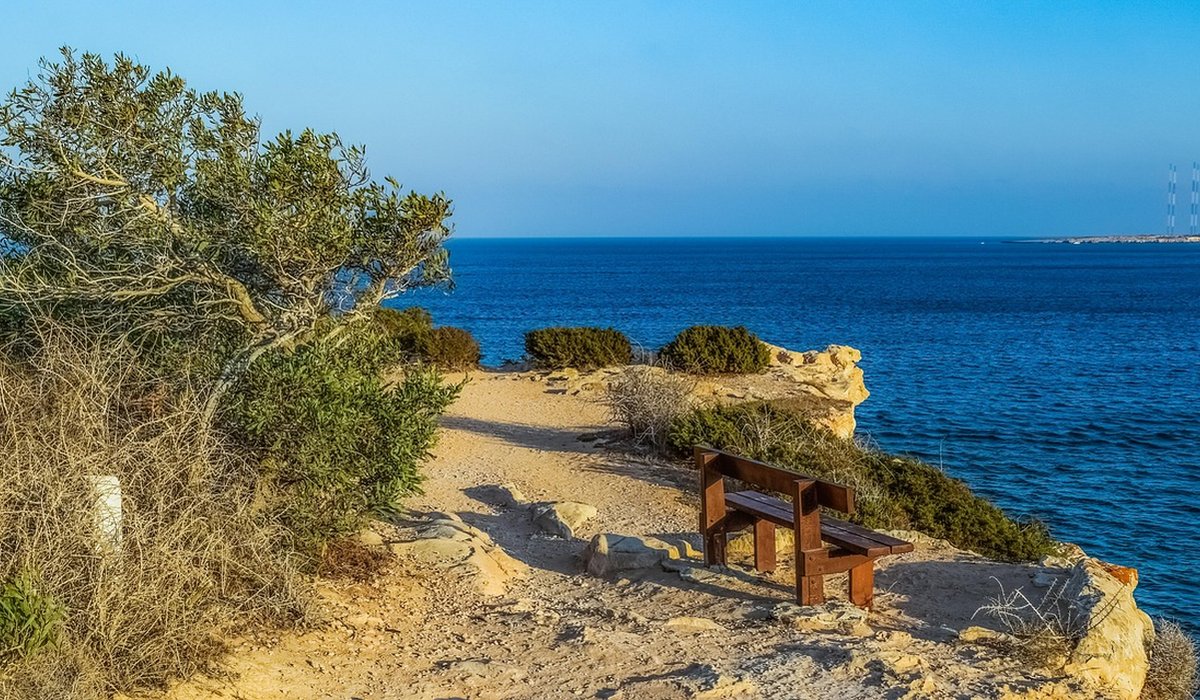
Why short coastal sections suit beginners
Coastal paths are the most forgiving introduction to hill-and-cliff walking you can find in the UK, provided you keep the distances honest. The trick is to treat a long-distance route as a menu rather than a challenge: pick one four- to six-kilometre section, walk it out, and walk it back. Out-and-back routes remove the pressure of catching a bus or a lift at the far end, and they let you turn around the moment the weather or your legs suggest it.
As a rough rule, a beginner coastal walk should sit under 100 metres of total ascent, stay on a path graded easy or moderate, and finish within three hours including stops.
- Aim for 4–6 km of walking, not of driving to the start.
- Choose out-and-back over a linear section until you know your own pace.
- Look for stretches with a village, car park or café roughly halfway.
- Leave the big climbs and the famous strenuous stretches for next season.
How to pick a gentle stretch of coast
Contour lines tell you more than photographs. On a map or route guide, gentle sections show widely spaced contours, and the best beginner stretches often follow old railway lines, sea walls, promenades, dunes and estuary embankments. These give you firm, level ground and a proper sea view without a single steep pitch.
Read the route description for words like "undulating", "steep flight of steps", "narrow cliff-edge path" and "exposed". Any of those is a signal to choose a shorter there-and-back version rather than a full traverse of the headland.
- Firm underfoot: short turf, compacted gravel, boardwalk, promenade or sea wall.
- Awkward underfoot: loose shingle, wet clay, eroded steps and muddy field gates.
- Look for gradients of roughly 10% or less. A 20% ramp on a cliff path feels far harder than it sounds on paper.
- Check whether any beach or estuary crossing depends on low tide; a rising tide can cut off a route within minutes.
Ground and kit for a beginner's half-day
You do not need boots with a mountaineering pedigree for a firm coastal path. Grippy trainers or lightweight walking shoes with real tread are plenty. What matters is that the soles aren't smooth and that the shoes are already broken in.
- Grippy shoes, plus a spare pair of socks in the bag.
- Waterproof jacket and over-trousers; coastal showers arrive with little warning.
- Hat, sun cream and sunglasses. UV off the water is stronger than you expect.
- Water, a snack, and a charged phone in a waterproof pouch.
- A paper map or guidebook, because signal comes and goes on cliffs.
Tell someone your route and your expected return time, and carry a small headtorch in winter, when afternoons darken well before four.
Pace, timing and the tea-stop rule
On coastal terrain, assume 2.5 to 3 km per hour including stops — noticeably slower than a town stroll. Add time for gates, stiles, photographs and short pulls uphill. Then plan your halfway point at a place with a bench, a shelter or a tea room, and build the day around that stop rather than around a target distance.
The tea-stop rule is simple: if there is somewhere warm and dry to sit at roughly the middle of your route, you will stop, rest and eat, and the second half will feel easy. If there isn't, bring a flask and a sit mat and make your own halfway stop with a view. Either way, eat before you feel hungry and drink before you feel thirsty.
Wind, exposure and knowing when to turn back
Coastal walking is mostly about wind and exposure, not distance. A gentle path on a calm morning becomes a serious one in a gusting south-westerly, and the same stretch can feel twice as long on the return leg. Turn back early, without apology, if any of these appear:
- You are leaning into the wind to stay upright, or gusts are pushing you sideways.
- The path narrows to a cliff edge with a long drop and no fence.
- Sea fret or mist cuts visibility below a few hundred metres.
- Spray is reaching the path, or waves are breaking higher than expected on the rocks below.
- You are cold, wet, or simply not enjoying it — that is reason enough.
Turning around costs you nothing. The view is different on the way back, the tea is closer, and you will arrive home pleased rather than wrung out. Build that habit early and coastal walking stays a pleasure for years instead of becoming a test of nerve. Start with a flat estuary wall or a dune-backed beach path, learn how your pace feels in a headwind, then add a little height and a little distance each season.


Leave a reply